
 Kevin Collins
4 Bold AI Predictions for the Near Term
Browsers, Payments, Protocols, and the Future of Work. Why the browser interaction layer is fundamentally broken for AI agents, and how this bottleneck, along with agent payments, protocol wars, and shifting skill demands, will reshape the technology landscape.
Quick Summary
The AI landscape is shifting from conversational chatbots to autonomous agents capable of executing complex workflows. Four major predictions emerge from current market data: (1) the browser interaction layer is fundamentally broken for AI agents, and despite 1,300% traffic growth in 2025, it must be either redesigned with native agent APIs or bypassed entirely; (2) agent-to-agent payment protocols are the wrong focus when existing rails already work; (3) MCP will be phased out in favour of CLI, which is 35x more token-efficient; and (4) systems-level thinking will become the only skill that matters as AI generates 46% of all code globally.
TL;DR
- •The browser interaction layer is broken for AI agents. Despite 1,300% traffic growth in 2025, automation scores just 7/10 in reliability. The fix is either native browser APIs for agents or bypassing browsers entirely [2]
- •Agent-to-agent payments are overhyped. Visa has already completed hundreds of secure AI-initiated transactions on existing infrastructure [7]
- •MCP will be marginalised in favour of CLI. The same task uses 145,000 tokens via MCP versus just 4,150 via CLI, a 35x reduction [9]
- •46% of all code is now AI-generated globally, rising to 100% at leading AI labs. Entry-level developer employment fell 20% since 2022 [12][15]
- •Systems-level thinking is the only skill that will matter. The World Economic Forum projects 170 million new roles requiring orchestration and critical thinking [16]
The artificial intelligence landscape is moving at a breakneck pace, shifting from conversational chatbots to autonomous agents capable of executing complex workflows. The focus is no longer on what AI can say, but on what it can do. Based on current market data, emerging protocols, and shifts in the developer ecosystem, four major predictions emerge for the next phase of AI evolution.
From the broken browser interaction layer to the phasing out of heavily hyped protocols, this analysis examines where the industry is actually heading, backed by the latest research, statistics, and real-world examples across 17 cited sources.
01.The Browser Interaction Layer Is Fundamentally Broken
The biggest bottleneck in AI automation today is not reasoning capability. It is the interaction layer. AI agents are being forced to puppet human-designed browsers through extensions and screen-parsing, a model that is fundamentally broken. The fix will take one of two forms: either browsers get completely redesigned with native agent APIs, exposing structured endpoints where an AI can say "buy this item" or "fill this form" without visual rendering, or the browser layer gets bypassed entirely through a CLI or API-first interaction layer that talks directly to services.
The Speed and Reliability Bottleneck
Browser automation for AI is currently incredibly inefficient. When an agent tries to navigate a standard web page, a simple "click this button" task can consume upwards of 17,000 tokens before the AI even begins to reason about its next step [1]. This token bloat leads to slow execution times and frequent failures.
Recent benchmarks highlight this reliability gap. In the Chrome Auto Browse benchmark, the median score for agentic tasks was just 7 out of 10, with almost every task requiring human re-prompting [2]. Complex cross-application coordination, such as moving data from Gmail to Google Sheets, scored a dismal 1 out of 10 [2].
Growth in agentic browser traffic between January and August 2025 [2]
Today's Stopgaps and the Path Forward
The first stopgap solutions are already visible. Anthropic's Chrome integration for Claude Code allows developers to control the browser via MCP (Model Context Protocol) [3], and the Manus Browser Operator turns local browser sessions into AI-operable environments [4]. These are clever approaches for today, but they remain bottlenecked by the same fundamental problem: the AI is still puppeting a human browser through an extension, routing through a visual interface that was never designed for machine interaction.
The demand for a solution is staggering. Between January and August 2025, agentic browser traffic grew by 1,300%, followed by a 131% month-over-month surge in September alone [2]. This explosive growth is happening despite the interaction model being fundamentally inefficient, which underscores the scale of the opportunity once the bottleneck is removed.
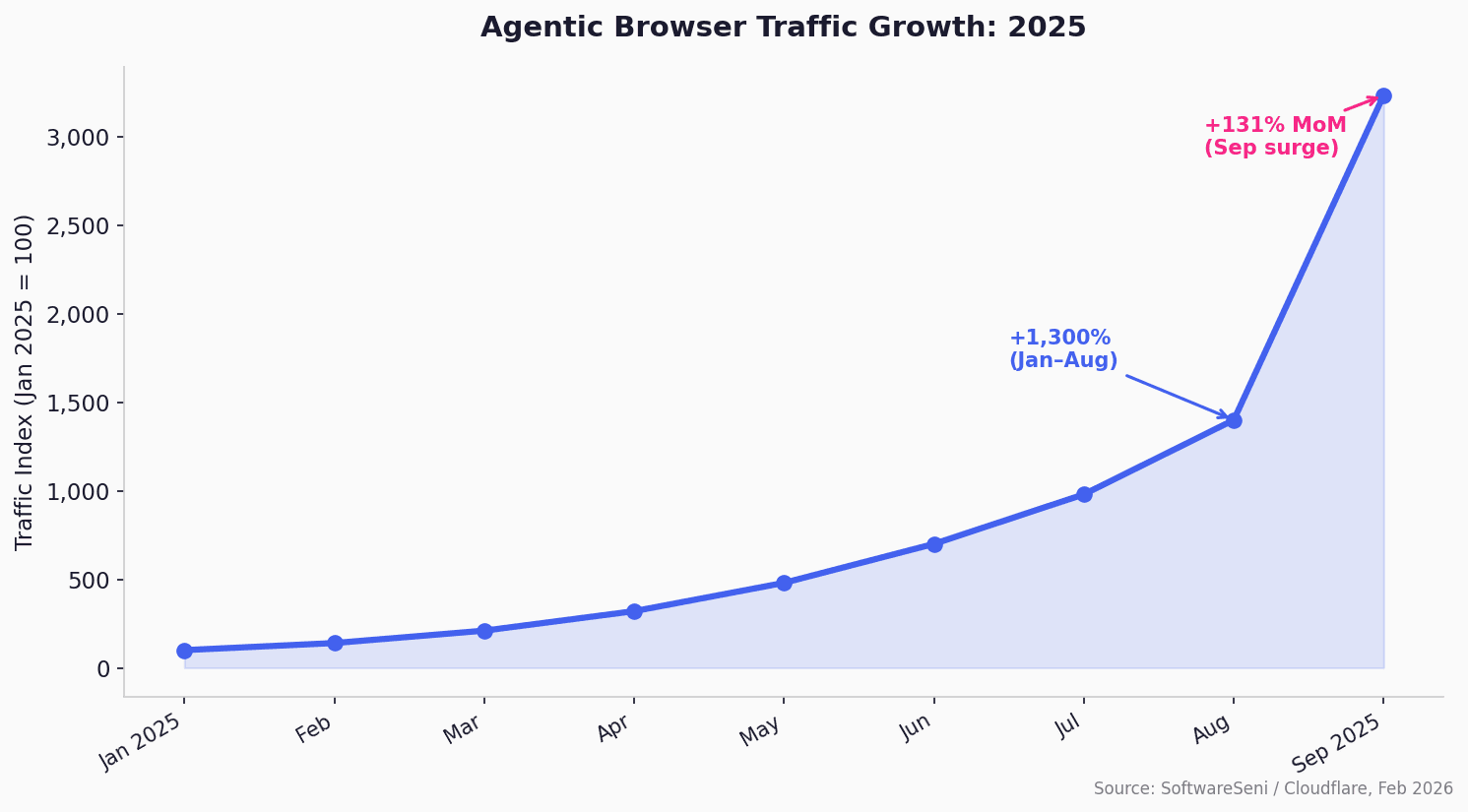
Figure 1: Agentic browser traffic growth, Jan-Sep 2025. Source: SoftwareSeni Browser Agent Reliability Benchmarks [2]
The question is not whether AI will get a better web interaction layer, but which path wins. Either browsers evolve to expose native agent APIs, letting an AI execute "purchase this item" through a structured endpoint without rendering a single pixel, or the browser layer becomes unnecessary entirely. Consider: if a developer working in Claude Code needs to buy something, why route through a visual browser at all? A direct API or CLI-first interaction with the service would be faster, cheaper, and more reliable by orders of magnitude.
The first browser vendor, or startup, that ships a truly agent-native interface will capture an enormous share of this market. With agentic traffic already growing at 1,300% annually and the AI agents market projected to reach $159 billion by 2030 [17], the commercial opportunity for whoever solves this interaction layer problem is difficult to overstate. This is not an incremental improvement. It is a platform shift, and the company that gets there first will define how AI interacts with the entire web.
02.Agent-to-Agent Payments Are the Wrong Focus
There is currently a massive amount of hype surrounding "agent-to-agent" payment protocols. Systems designed specifically for AI agents to pay each other using crypto microtransactions are gaining traction. Protocols like x402 (which repurposes the HTTP 402 "Payment Required" status code for blockchain transactions) are attracting significant attention [5]. However, building entirely new financial rails for AI is the wrong focus.
Existing Infrastructure Is the Answer
If the interaction layer problem outlined in Prediction 1 is solved, whether through native browser APIs or by bypassing the browser entirely, the need for specialised agent-to-agent payment networks largely evaporates. Instead of building new financial ecosystems, agents simply need direct access to existing payment systems that already process $1.9 trillion in global revenue [6].
Major financial institutions are already proving this model works. In late 2025, Visa announced the completion of hundreds of secure, agent-initiated transactions using its Trusted Agent Protocol [7]. Crucially, this protocol is built on existing web infrastructure, not a new blockchain network.
"In 2026, AI agents won't just assist your shopping. They will complete your purchases, powered by Visa's global scale, standards leadership, and unparalleled commitment to secure agentic commerce."
Rubail Birwadker, SVP at Visa [7]
Real-World Examples
AI agents are already successfully navigating traditional checkouts via browser automation:
Skyfire enabled a Consumer Reports AI agent to autonomously purchase Bose headphones using standard e-commerce flows [7].
Nekuda allowed fashion app users to move from AI-generated style recommendations to a completed purchase in a single tap via existing checkout APIs [7].
Ramp applied Visa's Intelligent Commerce framework to automate B2B corporate bill payments [7].
If an AI can securely access Stripe through a native API or structured browser endpoint and execute a payment using a saved corporate card, there is no need to reinvent the wheel with agent-specific crypto wallets.
03.MCP Will Be Phased Out in Favour of CLI
The Model Context Protocol (MCP), introduced by Anthropic in late 2024, was hailed as the "USB-C for AI", a universal standard for connecting AI agents to external tools and data sources [8]. However, MCP will ultimately be phased out, or heavily marginalised, in favour of the Command Line Interface (CLI).
For developers building tools for AI agents, the focus should shift away from MCP and toward robust CLI implementations.
The Context Window Problem
The fundamental flaw with MCP is that it is a massive context hog. When an agent connects to an MCP server, the server dumps its entire schema (tool definitions, parameters, and descriptions) into the AI's context window.
For example, connecting a standard GitHub MCP server consumes approximately 55,000 tokens just to define its 93 tools [9]. In an enterprise environment requiring multiple connections (GitHub, Jira, Microsoft Graph), an agent can easily burn through 150,000+ tokens before answering a single prompt [9].
The Token Efficiency of CLI
By contrast, AI models are native CLI speakers. They have been trained on billions of lines of terminal interactions, shell scripts, and documentation. When an AI is asked to use git or gh, it already knows the syntax.
Recent benchmarks by enterprise developers reveal a staggering difference in efficiency. In a real-world test automating Microsoft Intune compliance, the MCP approach consumed roughly 145,000 tokens. The exact same task executed via CLI consumed just 4,150 tokens, a 35x reduction [9].
tokens via MCP
tokens via CLI (35x reduction)
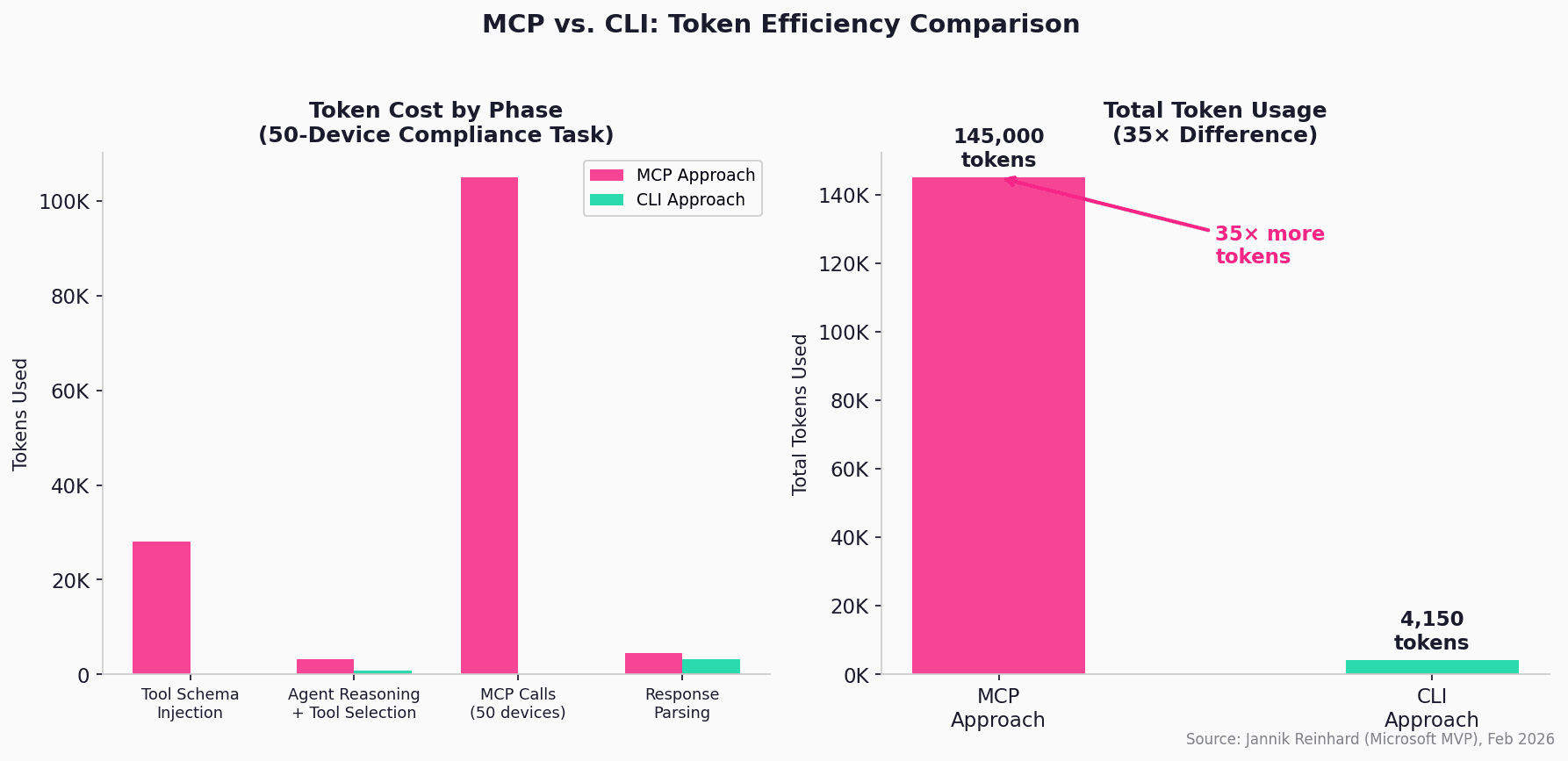
Figure 2: MCP vs CLI token efficiency comparison. Source: Jannik Reinhard, enterprise benchmarks [9]
Furthermore, the CLI approach left the agent with 95% of its context window available for actual reasoning, whereas the MCP approach caused multi-step reasoning to break down due to context exhaustion [9].
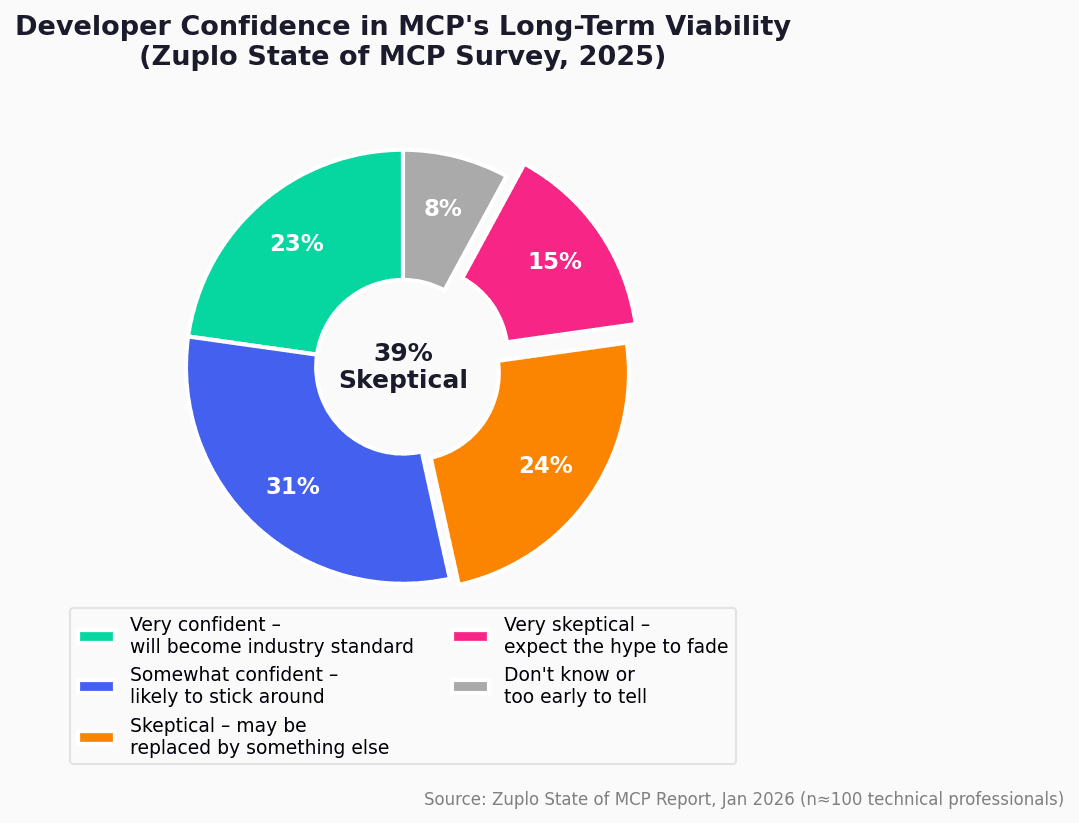
Figure 3: Developer confidence in MCP long-term viability. Community sentiment data, Q1 2026.
The Market Is Already Shifting
Major players are already pivoting. In early 2026, Google released an open-source CLI for Google Workspace (Gmail, Drive, Docs, Sheets), explicitly stating it was "built for humans and AI agents" [10]. While it includes an MCP mode, the base interface is CLI. As one developer recently noted on a popular AI forum: "MCP was a mistake. Bash is better." [11]
04.Systems-Level Thinking Will Be the Only Skill That Matters
The job market is undergoing a violent restructuring. Entry-level knowledge work is disappearing, and the ability to write boilerplate code is no longer a marketable skill. Near 100% of standard coding will soon be done by AI. The workers who survive and thrive will be those who possess systems-level thinking.
The End of Entry-Level Coding
The statistics surrounding AI code generation are staggering. As of early 2026, roughly 46% of all code globally is generated by AI assistants like GitHub Copilot [12]. However, inside leading AI labs, that number is much higher. At Anthropic, 70% to 90% of all company-wide code is AI-generated, and for the Claude Code project itself, that number is 100% [13].
"100% for two+ months, I don't even make small edits by hand. I shipped 22 PRs yesterday and 27 the day before, each one 100% written by Claude."
Boris Cherny, Head of Claude Code at Anthropic [13]
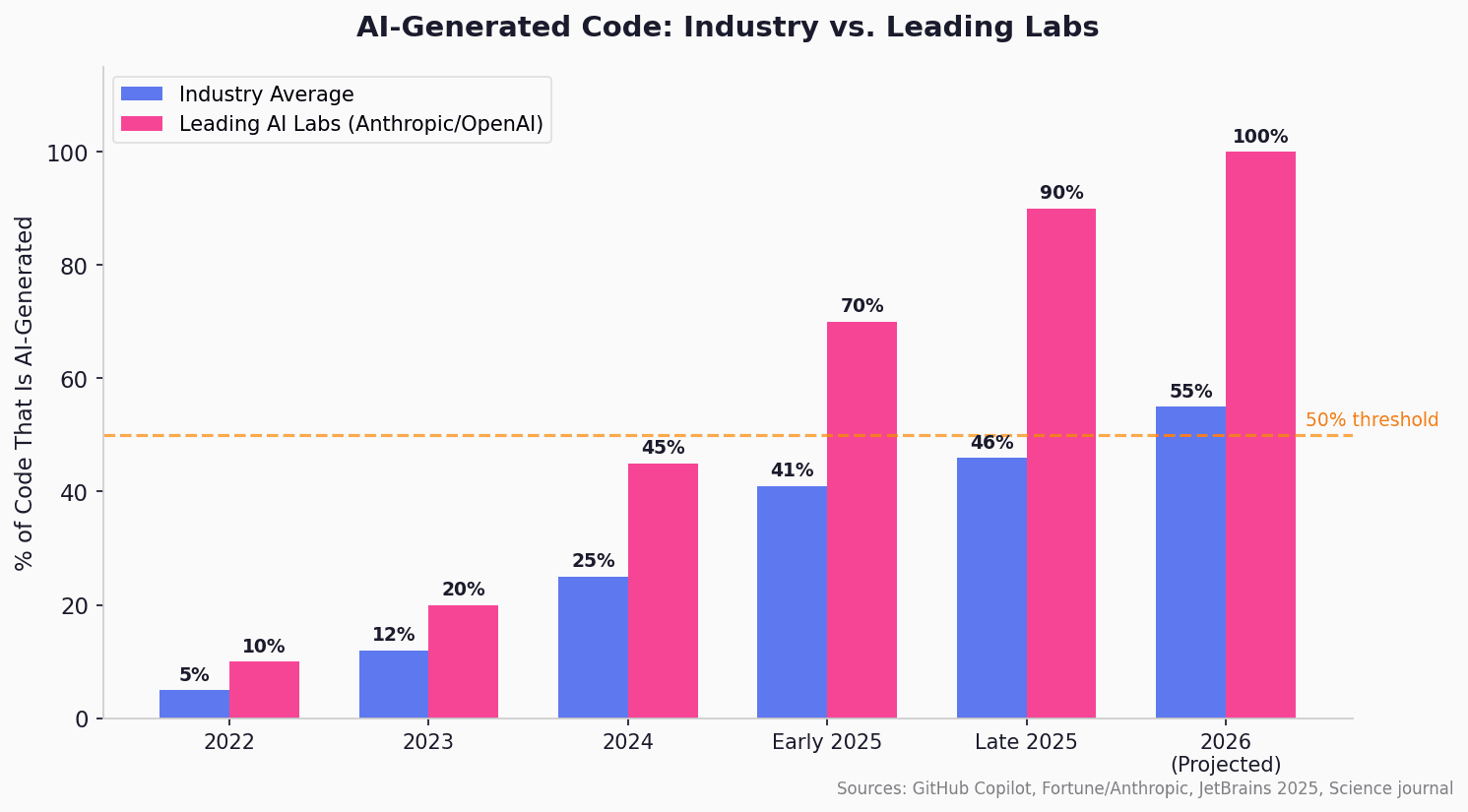
Figure 4: AI-generated code as percentage of total output. Sources: GitHub/ShiftMag [12], Fortune [13]
With AI capable of planning, coding, securing, and deploying full software lifecycles [14], the demand for junior developers is plummeting. Employment for 22-to-25-year-old software developers declined by nearly 20% between 2022 and mid-2025 [15]. Overall entry-level job postings have sunk 35% since 2023 [15].
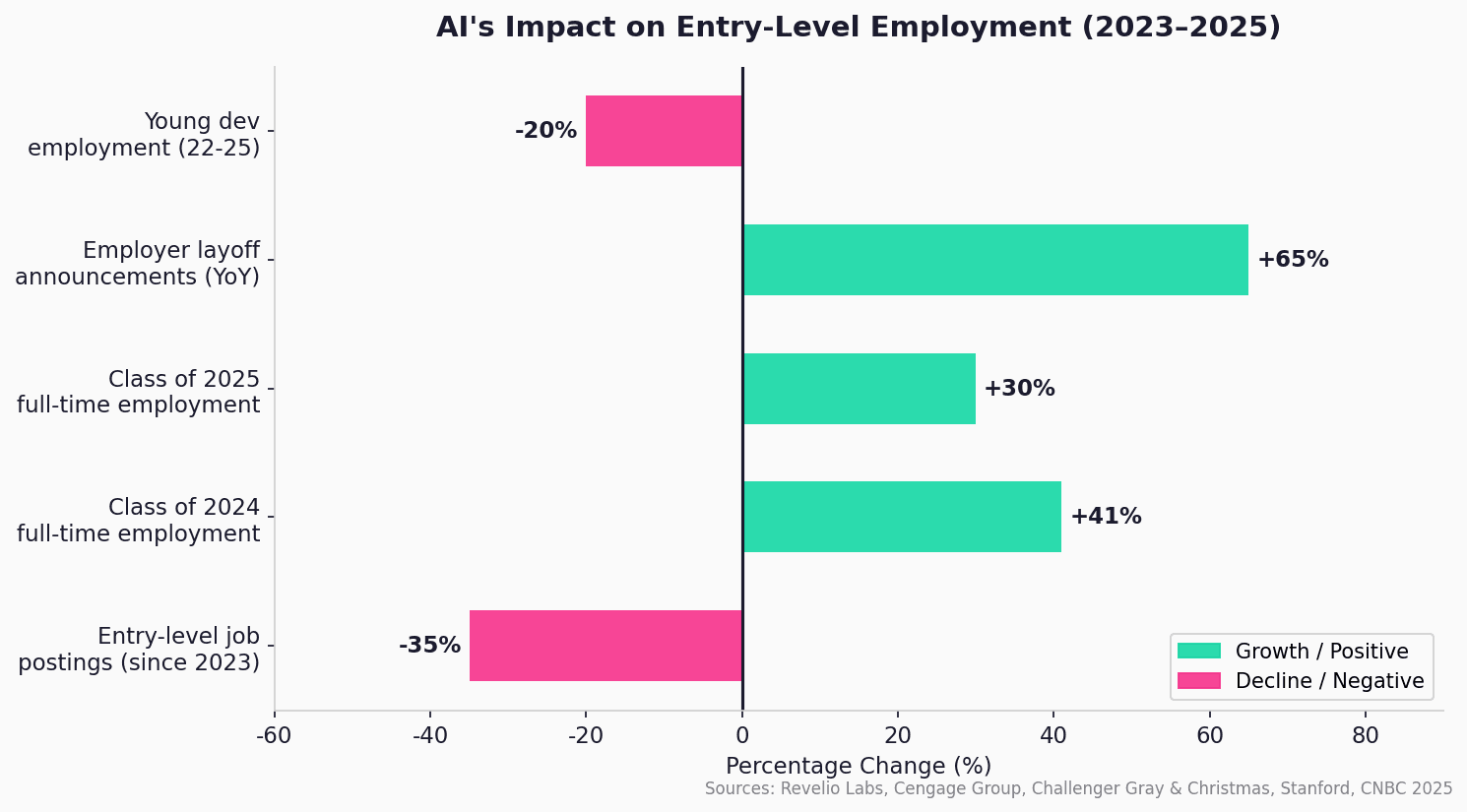
Figure 5: Entry-level employment impact, 2022-2025. Source: CNBC [15]
The Rise of the Systems Thinker
If AI can write the code, what is the role of the human? The answer is orchestration and systems architecture.
According to the World Economic Forum's Future of Jobs Report 2025, while 92 million jobs will be displaced by automation, 170 million new roles will be created [16]. The skills required for these new roles are shifting dramatically away from rote technical execution and toward cognitive flexibility.
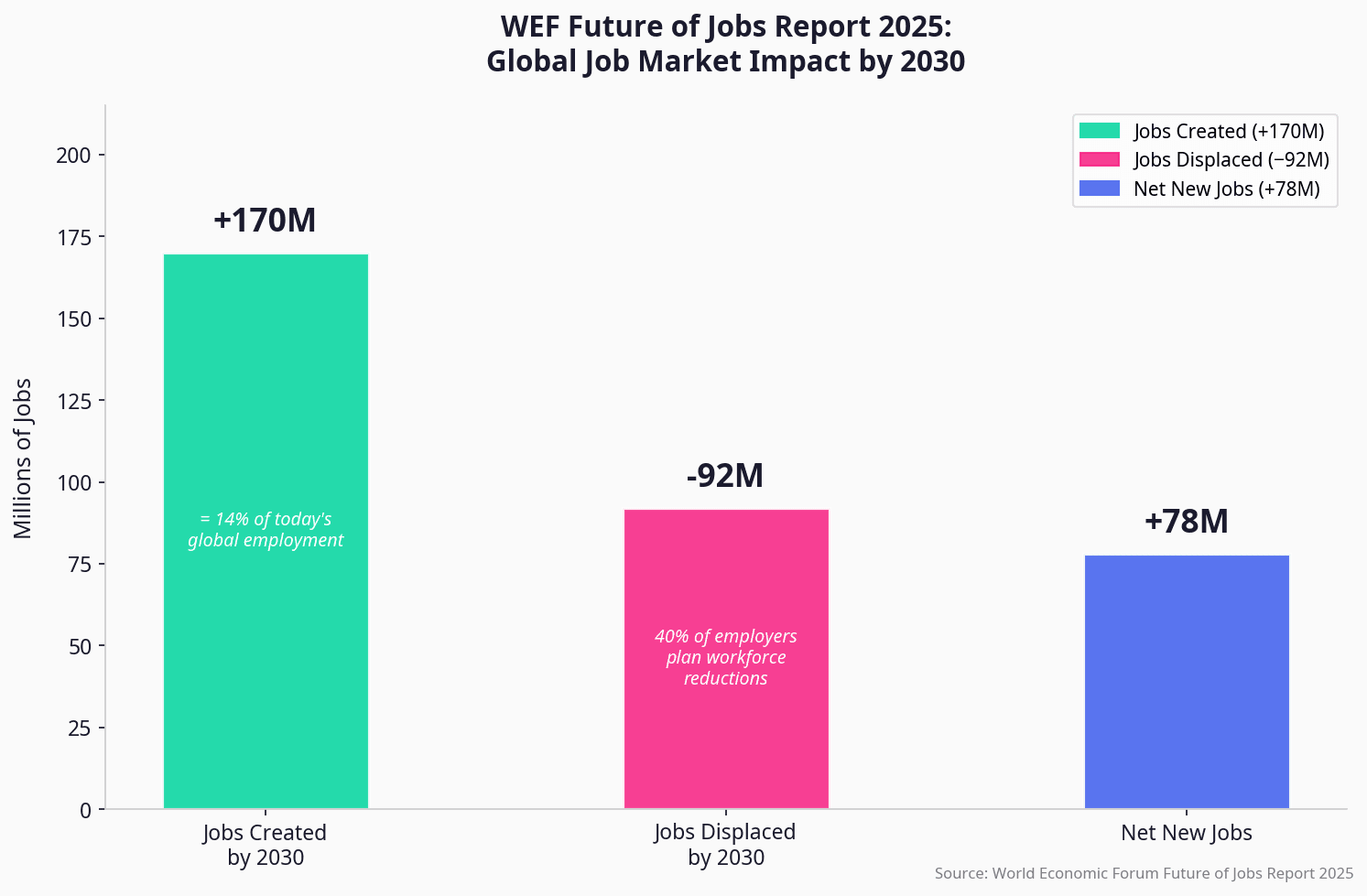
Figure 6: Jobs created vs displaced by 2030. Source: World Economic Forum Future of Jobs Report 2025 [16]
| Top Declining Skills | Top Rising Skills |
|---|---|
| Manual coding & syntax memorisation | Systems-level thinking & architecture |
| Basic data entry & processing | AI orchestration & prompt engineering |
| Routine quality assurance testing | Critical thinking & complex problem solving |
| Single-domain specialisation | Cross-domain generalism & adaptability |
Fortune 500 executives now report that the "AI skills gap" is actually a "critical thinking gap" [17]. Companies no longer need people who know how to write a specific function; they need people who understand why that function needs to exist, how it connects to the broader business logic, and how to orchestrate multiple AI agents to build it securely.
Those who refuse to adapt to AI will be replaced. But those who cultivate systems-level thinking will become the architects of the new digital economy.
05.Supporting Data
The AI agents market underpins all four predictions. Projected to grow from $7.8 billion in 2024 to $159 billion by 2030, representing a compound annual growth rate (CAGR) of over 44%, the infrastructure supporting autonomous AI agents is scaling rapidly.
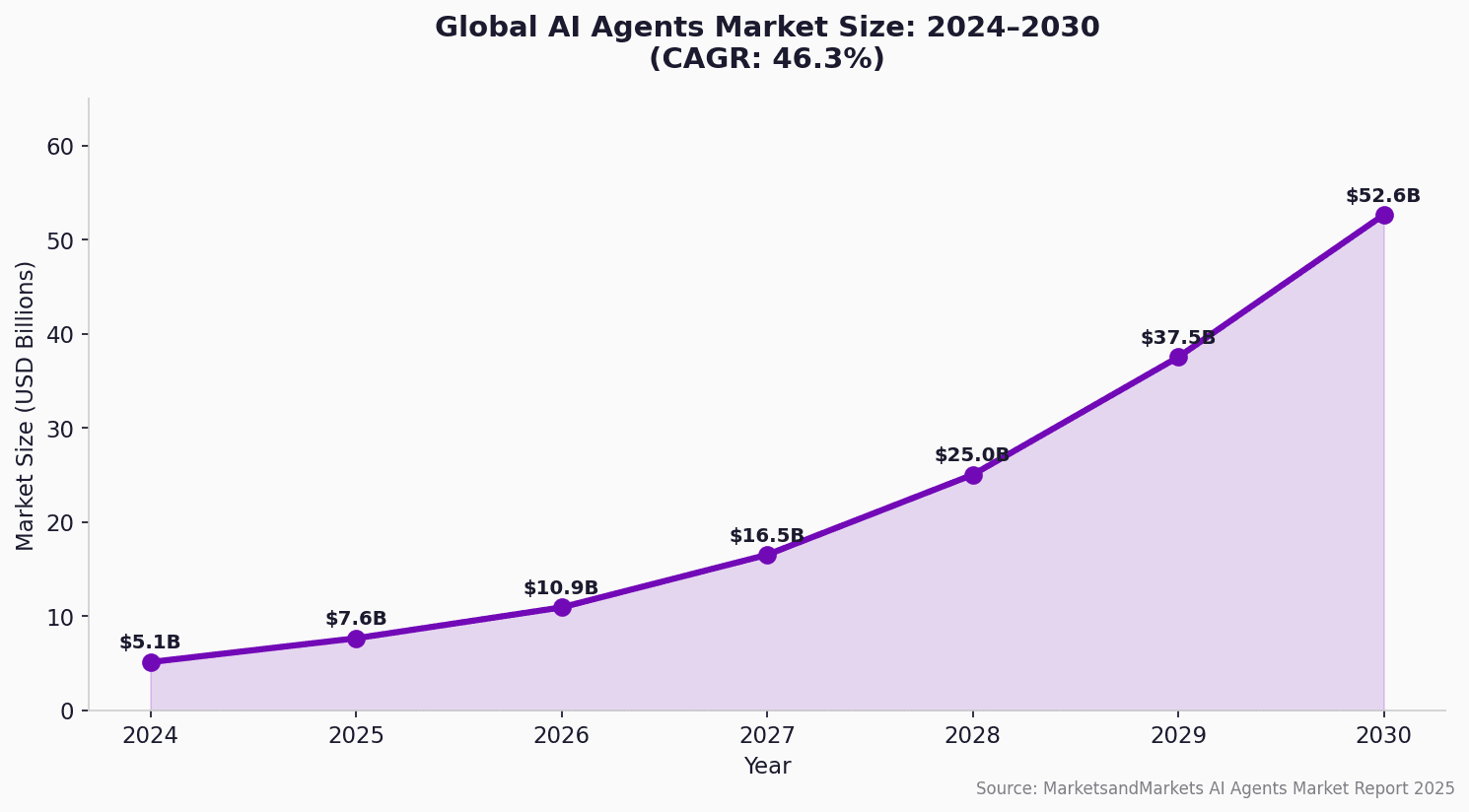
Figure 7: AI agents market size projection, 2024-2030. Multiple industry sources.
06.Frequently Asked Questions
Why is the browser interaction layer broken for AI agents?
The current model forces AI agents to interact with the web by puppeting human-designed browsers through extensions and screen-parsing. Tools like Anthropic's Claude Code Chrome integration (via MCP) and the Manus Browser Operator are clever stopgaps, but they remain bottlenecked by routing through a visual browser that was never designed for machine interaction. The real breakthrough will come when browsers are redesigned with native agent APIs, or when the browser layer is bypassed entirely through direct service APIs and CLI-first interaction.
Why is MCP losing to CLI for AI agents?
MCP consumes massive amounts of context window tokens. A standard GitHub MCP server uses approximately 55,000 tokens just to define its 93 tools. In benchmarks, the same task that consumed 145,000 tokens via MCP required only 4,150 via CLI, representing a 35x reduction. CLI leaves 95% of the context window available for actual reasoning.
What percentage of code is now written by AI?
Approximately 46% of all code globally is generated by AI assistants like GitHub Copilot. Inside leading AI labs the percentage is much higher: at Anthropic, 70-90% of company-wide code is AI-generated. For the Claude Code project, 100% of code has been AI-written for over two consecutive months.
Will AI replace entry-level programming jobs?
Entry-level coding roles are declining significantly. Employment for 22-to-25-year-old developers fell by nearly 20% between 2022 and mid-2025. However, the World Economic Forum projects 170 million new roles will emerge by 2030, requiring systems-level thinking and AI orchestration skills rather than manual coding. AI training programmes can help bridge this transition.
Do AI agents need their own payment systems?
Building entirely new financial rails for AI agents is likely unnecessary. If agents can interact with services directly, whether through redesigned browser APIs or by bypassing the browser entirely, they can use existing payment infrastructure. Visa has already completed hundreds of secure agent-initiated transactions using its existing network, and companies like Skyfire and Ramp have demonstrated AI agents navigating standard e-commerce checkouts.
How fast is the AI agents market growing?
The AI agents market is projected to grow from $7.8 billion in 2024 to $159 billion by 2030, a CAGR of over 44%. Agentic browser traffic specifically grew by 1,300% between January and August 2025, with an additional 131% month-over-month surge in September.
What is systems-level thinking and why does it matter?
Systems-level thinking is the ability to understand how individual components connect within broader architectures, orchestrate multiple AI agents, and design secure solutions at scale. As AI handles routine coding, the World Economic Forum identifies systems thinking, AI orchestration, and critical problem-solving as the top rising skills. Fortune 500 executives report the "AI skills gap" is really a "critical thinking gap."
07.References
[1] Towards AI. "Vercel Just Solved Browser Automation for AI Agents." January 2026.
[2] SoftwareSeni. "Browser Agent Reliability Benchmarks." February 2026.
[3] Anthropic. "Claude Code Chrome Integration Documentation." December 2025.
[4] Manus. "Manus Browser Operator." November 2025.
[5] Galaxy Research. "Agentic Payments: x402 and AI Agents in the AI Economy." January 2026.
[6] McKinsey & Company. "The 2025 Global Payments Report." September 2025.
[7] Visa Inc. "Visa and Partners Complete Secure AI Transactions." December 2025.
[8] Anthropic. "Introducing the Model Context Protocol." November 2024.
[9] Jannik Reinhard. "Why CLI Tools Are Beating MCP for AI Agents." February 2026.
[10] VentureBeat. "Google Workspace CLI brings Gmail, Docs, Sheets and more into a common interface." February 2026.
[11] Reddit (r/AI_Agents). "The Truth About MCP vs CLI." March 2026.
[12] GitHub / ShiftMag. "State of Code 2025." February 2026.
[13] Fortune. "100% of code at Anthropic and OpenAI is now AI-written." January 2026.
[14] RanTheBuilder. "AI-Driven SDLC: How to Build Secure, Governed, and Scalable Systems." February 2026.
[15] CNBC. "AI puts the squeeze on new grads looking for work." November 2025.
[16] World Economic Forum. "Future of Jobs Report 2025." January 2026.
[17] Fortune. "The AI skills gap is really a critical thinking gap." December 2025.
Conclusion
The AI industry is at an inflection point. The four predictions outlined here, the broken browser interaction layer, the futility of custom agent payment rails, the decline of MCP in favour of CLI, and the imperative of systems-level thinking, are all connected by a single thread: the shift from AI as a tool to AI as an autonomous actor.
Organisations that recognise these shifts early and invest in the right infrastructure (native agent APIs or direct service access over browser puppeting, CLI over MCP, systems thinkers over syntax memorisers) will have a significant competitive advantage.
For businesses navigating this transition, Echofold provides custom AI development and training programmes designed to build exactly these capabilities. The future belongs to those who can think in systems.

Stay Ahead of the Curve
Get research-backed insights on AI trends, developer tools, and the future of work delivered to your inbox.